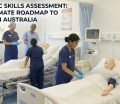
Your First Step Towards a Healthcare Career in Australia
Dreaming of a career in Australia’s world-class healthcare system? It is a fantastic goal with massive opportunities, but navigating the requirements can sometimes feel a bit tricky. To work as a Nurse, Doctor, or Therapist here, your qualification needs to meet the specific standards set by AHPRA (Australian Health Practitioner Regulation Agency).
Why the Right Course Matters?
The most important thing to know is that not every course qualifies you for registration. Choosing the right programme is the key to your future migration and career success. Without an AHPRA-approved qualification, you cannot practise in Australia, regardless of your degree.
1. What AHPRA Approval Truly Means for International Students?
AHPRA sets the standard for education, ethical conduct, and competence for Australia’s health workforce. For an international student, enrolling in an approved course offers three major benefits:
A. Direct Registration Eligibility (The Green Light)
Completing an AHPRA-approved program is the most direct and least complicated path to professional registration. It signifies that the Australian National Board for that profession (e.g., the Medical Board, Dental Board, or Nursing and Midwifery Board) has officially recognised the qualification as meeting the required standards for safe practice in Australia.
Expert Insight: If you choose a non-approved course, your international qualification will need to undergo a lengthy, complex, and often costly process of assessment, bridging programs, or competency exams (like the Outcomes-Based Assessment for nurses) before you are even eligible to apply for registration. Choosing an approved course eliminates this high-risk step.
B. Smooth Transition to the Post-Study Work Stream (Subclass 485 Visa)
Your ability to access the Temporary Graduate visa (subclass 485) and gain invaluable post-study work experience often depends on your chosen qualification. Graduates of approved courses are well-positioned to meet the criteria, allowing you two to four years (or more, depending on your location of study and occupation) to work full-time in Australia and gain the professional experience needed for permanent residency (PR).
C. Enhanced Employability
Australian employers, including hospitals, clinics, and aged care facilities, priorities graduates who can swiftly obtain full AHPRA registration. An approved qualification significantly increases your employability and salary prospects from day one.

2. The Core Regulated Professions and Essential Qualifications
AHPRA regulates over 16 health professions. While the general principle of AHPRA approval applies to all, the specific minimum qualification and registration steps vary significantly.
| Profession | Minimum Australian Qualification for Registration | English Language Requirement (General Standard) |
| Nursing & Midwifery | Bachelor of Nursing, or Master of Nursing (Entry-to-Practice) | IELTS 7.0 (Band 7 in all section except 6.5 in writing) or OET B |
| Physiotherapy | Bachelor or Master of Physiotherapy | IELTS 7.0 (no score below 7.0) or OET B |
| Pharmacy | Bachelor/Master of Pharmacy | IELTS 7.0 (no score below 6.5) or OET B |
| Psychology | Four-year APAC sequence + Master’s or PhD | IELTS 7.0 (no score below 7.0) or OET B |
| Medicine | Medical Degree (MBBS) or Doctor of Medicine (MD) | IELTS 7.0 (no score below 7.0) or OET B |
Important Note on Qualifications: The level of your degree matters. For many fields, like Nursing and Physiotherapy, both a Bachelor’s and a Graduate-Entry Master’s degree (for those with a prior non-health degree) can be AHPRA-approved. Always confirm the specific program’s approval status before applying.
3. The Cornerstone of Your Application: English Language Skills
English language proficiency is mandatory and non-negotiable for all AHPRA applications, regardless of whether you are an Australian or international graduate. This is fundamental to providing safe and effective care.
There are generally two pathways to meet the English Language Skills (ELS) Registration Standard:A. Test Pathway
You must achieve the required minimum scores in one of the approved tests:
A. Test Pathway
You must achieve the required minimum scores in one of the approved tests:
- IELTS (Academic)
- OET (Occupational English Test)
- PTE Academic (Pearson Test of English Academic)
- TOEFL iBT (Test of English as a Foreign Language)
The required score often sits around an overall $7.0$ band (or equivalent) with no band lower than $6.5$ or $7.0$ (depending on the profession).
B. Educational Pathway (Exemption)
In some cases, you may be exempt from providing a test result if you can prove you completed at least five years of continuous full-time (or equivalent) education, including secondary education, conducted and assessed in English in a recognised country (like Australia, New Zealand, the UK, the US, Canada, or Ireland).
Ignite Consultancy Advisory: Even if you qualify for the exemption, we strongly advise international students to aim for the minimum English requirements during their studies. Strong English skills are vital for clinical placement success and job interviews, and they boost your points for future Permanent Residency applications.
From Student to Practitioner: The AHPRA Registration Pathway
Once you complete your AHPRA-approved course, your focus shifts from holding a Student Visa to securing Practitioner Registration. Here is the streamlined four-step process.
Step 1: Student Registration (Automatic)
You don’t need to do anything here. Upon enrolment, your Education Provider automatically notifies AHPRA to register you as a Student Practitioner. This is mandatory for your clinical placements.
Step 2: Apply Early
Do not wait until graduation. You can apply for professional registration up to 90 days before completing your final course requirements. Applying early is critical to avoiding employment delays.
Step 3: Gather Your Documents
To finalise your application, prepare certified copies of the following:
- Proof of Identity: Passport or standard ID.
- International Criminal History Check (ICHC): Required if you have lived outside Australia/NZ for 6+ months since age 18.
- English Language Skills (ELS): Evidence of meeting the standard.
- Declarations: Fitness-to-Practice and Criminal History.
- Insurance: Evidence of Professional Indemnity Insurance arrangements.
Step 4: Verification & Approval
Your education provider will send final confirmation of your course completion to AHPRA. Once AHPRA verifies that all standards are met, you will be granted General Registration.
Note: You cannot legally practice until your name appears on the public register.
Strategy: Choosing the Right Course for PR
While registration allows you to practice, the right qualification and location can fast-track your Permanent Residency (PR).
- Regional Study Advantage: Studying health courses (e.g., Nursing, Physiotherapy) in designated regional areas can unlock extra points for PR and extend your Post-Study Work Visa.
- Skilled Occupation List (SOL) Alignment: Health professions are consistently high-priority on Australia’s Skilled Occupation Lists, making them some of the most secure pathways to PR
Secure Your Future with Ignite Consultancy
The Australian health sector offers stability and a high quality of life, but the journey requires meticulous planning. The wrong course selection can cost you years of time and thousands of dollars.
Don’t leave your career to chance.
Ignite Consultancy specializes in mapping out the entire AHPRA-approved study and PR pathway. We provide:
- Course Verification: Ensuring your program is accredited.
- Visa Management: Assisting with Genuine Student (GS) assessment and applications.
- Registration Support: Guiding you through post-graduation AHPRA paperwork.
Ready to IGNITE Your Career?
Contact Ignite Consultancy today for a personalised consultation. Let’s take the surest step toward your registered health career in Australia.